A familiar starting point
Favorite toys, familiar people and a comfortable space can make it easier to take part. Some children find home less tiring than a new clinic environment.
Autism & Brain Institute · Nevada
Care that meets your child in their world. Explore how virtual therapy can support communication, daily routines and family connection—at your child's pace.
Our separate telehealth website is not open yet. Call us to discuss care options.
Leer en españolTelehealth connects a family and a clinician through a video visit. Therapy may involve play, conversation, daily routines or coaching a caregiver. Your child does not have to sit still, speak aloud or look at the screen for the whole visit. The plan should match their communication, comfort and support needs.
Favorite toys, familiar people and a comfortable space can make it easier to take part. Some children find home less tiring than a new clinic environment.
Virtual care can reduce driving and help families in rural communities connect with specialists. It still requires a suitable device, internet and an available clinician.
A therapist can see the routines that matter to your family: choosing a snack, joining play, getting dressed or preparing for a change.
Coaching helps you notice communication, adjust the environment and use practical strategies between visits—not become your child's full-time therapist.
Good care supports a child's life—not a performance of being less autistic. Being comfortable, understood and able to communicate matters more than looking attentive on camera.
A simple visual plan, familiar opening routine and choices of activities can reduce uncertainty. Changes can be explained in advance.
Adjust sound, lighting, pace and visual clutter. Movement, headphones and harmless stimming can be part of participating.
Words, gestures, scripts, facial expressions, typing and AAC are all communication. Goals can support understanding and self-advocacy without forcing eye contact.
A child can decline an activity or ask for a break. Their assent guides the visit; access to communication is never something they must earn.
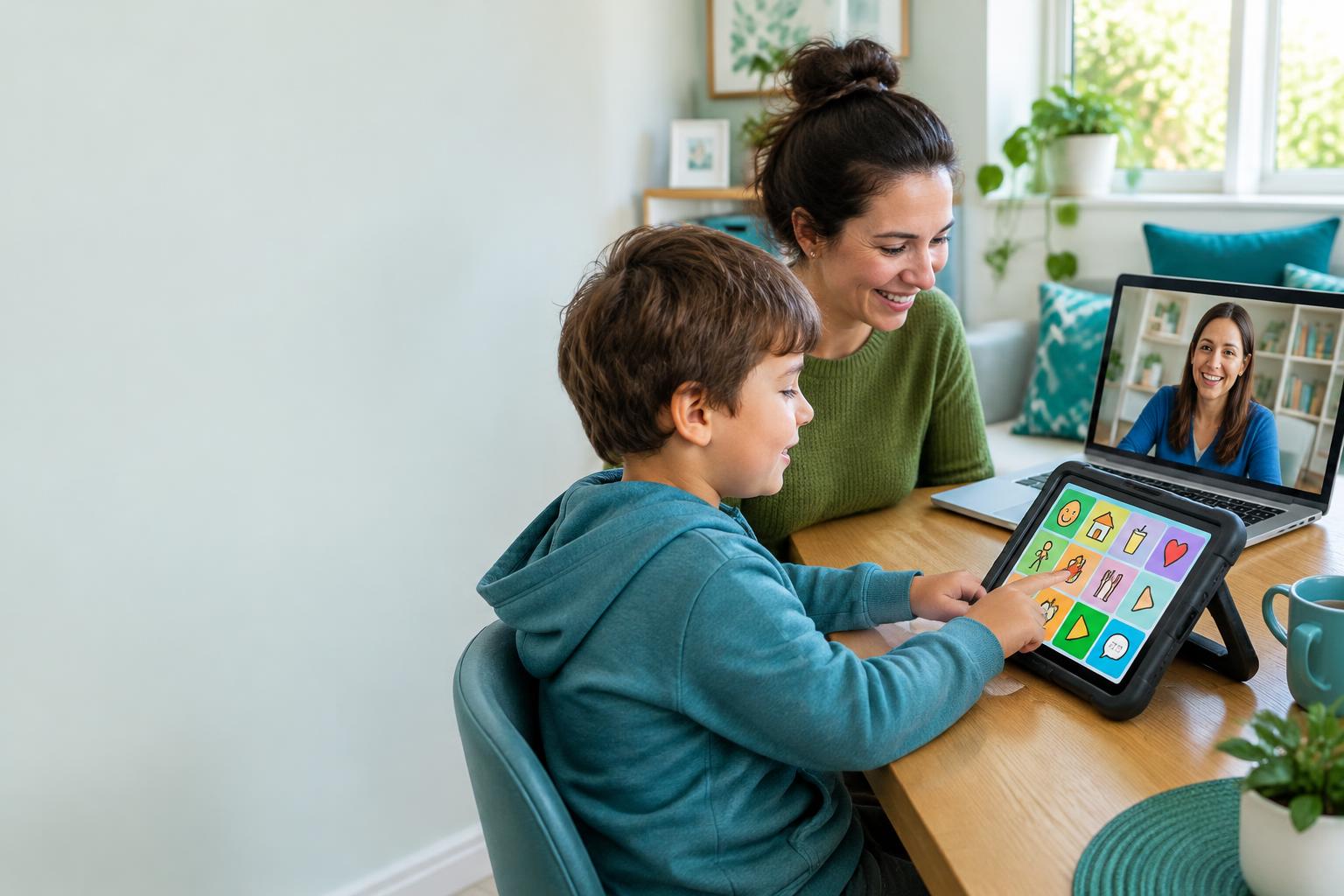
Augmentative and alternative communication (AAC) includes picture boards, signs, typing and speech-generating devices. It can support someone who does not use speech, or someone who needs another way to communicate at certain times. There is no need to wait for speech to begin supporting communication.
Use your child's own device or board, within reach throughout the visit. When possible, use a separate device for the video call so their talker remains available.
A clinician can show you how to point to or select words while talking, then pause. The child is not required to copy, find the 'right' button or prove readiness.
AAC can help a child comment, ask questions, share humor, disagree and say 'help,' 'stop' or 'break'—not only ask for a snack or toy.
Caregivers can practice modeling and responding during everyday routines. Board layout, positioning and access methods may need individual assessment; some changes are best checked in person.
Your child chooses a toy. The caregiver and therapist follow their interest, model language or AAC, and leave time for a response in any form.
A therapist coaches you during a familiar routine, such as getting ready or choosing a snack, with small changes that fit your child's sensory and communication needs.
You discuss a difficult moment, try a strategy together and choose one manageable idea to practice. A child may join for part of the visit rather than stay on camera throughout.
The right service and format depend on individual assessment, clinician availability and coverage. Not every task can be safely assessed or treated by video.
Understanding language, expressing ideas, social connection and meaningful communication.
Communication-partner coaching, device or board use, and communication in daily life.
Caregiver-supported daily living skills, sensory strategies and participation in routines.
Selected mealtime routines and caregiver coaching. Swallowing safety or medical concerns may require in-person evaluation.
Practical ways to support regulation, play and connection without adding pressure.
Planning, starting tasks and building routines for older children and teens.
Telehealth can be useful when the family has a workable space, reliable connection and support for activities. Age or an autism diagnosis alone does not decide whether it will work. A clinician should discuss your priorities, observe participation and adjust the format together with you.
In-person or combined care may be a better choice for hands-on assessment, equipment fitting, significant medical or swallowing concerns, or when video is stressful or inaccessible. Results vary; telehealth is not a promise of a particular outcome. It is not an emergency service. For an emergency, call 911.
For Nevada telehealth care, your child must be physically in Nevada during the visit, and the clinician must hold the required active Nevada license or registration for their discipline. Tell your care team if you will travel. Ask about service availability, consent, privacy and insurance coverage before booking.
Ask about telehealth, AAC support or a combination of care options. Our team can help you consider the next step.
Call (702) 463-5460